AI Careers in Sustainable Agriculture In 2026, the greatest places for AI to be employed in sustainable farming will be places where there aren’t many other farms and there is a lot of labor to do. AI and sustainable farming are coming together to create tremendous new opportunities at a time when climate change, resource depletion, and the need for food are all getting worse.
The market for AI in farming grew quickly, going from $2.57 billion in 2025 to $3.17 billion in 2026. By 2035, it will be worth $20.12 billion, which is 22.85% higher than it is currently. AI Careers in Sustainable Agriculture This quick surge is because farmers need to be very careful, systems need to be able to handle changing weather, and resources need to be used wisely. The idea is to find ways to feed more people without harming the planet too much.
There are a number of decent AI jobs in sustainable agriculture in 2026, right now for folks who wish to work for a company. These positions are perfect for folks who are just starting out because not many people desire them. People likes these jobs because they use both modern farming methods with old ones. This is helpful when there aren’t enough personnel to keep everything running smoothly.
By 2026, it’s anticipated that more than 70% of agronomists will be using AI tools. People still need to learn more about how to use AI to keep an eye on land and carbon. People desire to work in these long-term AI farming jobs for beginners, but not many people do. There is more and more employment available in this field.
This essay talks about what they need and how to get started. If you want to make a lot of money and improve the world, you should read this.
Table Overview
Sections of the Table:
(Given the high demand for AI-based sustainable farming, what factors are limiting competition?)
[The Seven Best AI Jobs for Green Farming in 2026]
(Why a lot of people don’t want employment, even if there are a lot of them.)
- Agronomist (#ai-agronomist)
- Sustainable Agriculture AI Consultant (#sustainable-ai-consultant)
- Precision Agriculture Specialist (#precision-ag-specialist)
- Agricultural Data Analyst (Sustainability Focus) (#ag-data-analyst)
- Soil Health AI Analyst (#soil-health-ai-analyst)
- AI Specialist for Agri-Startups (Sustainability) (#ai-agri-startup-specialist)
- Drone Operator for Crop Surveillance (#drone-operator)
Learn what skills you need for these occupations and how to get started (#getting-started).
[Look at obstacles] shows the problems and possible future stages. This is it.
Why Demand Is Rising but Competition Is Low
Why do some people not want to learn about AI-based sustainable farming, while others want? Precision farming is anticipated to rise by 12% per year until 2026, and AI in farming is expected to expand by more than 22% each year.
We need occupations that use AI to improve the environment, like going through data to cut trash by 20% and make $90 billion a year by 2030. Because of climate change, a scarcity of labor (which will produce 50% more employment from 2025 to 2027), and the fact that by 2030, more than half of farm occupations will need AI capabilities, demand is rising up.
This is a new business that needs people who are excellent at both farming and technology. There aren’t many people who work in it. Because they’ve been performing their jobs for so long and haven’t used AI in a while, a lot of farmers don’t know how to use it. This implies that some regions, such as tiny farms in impoverished countries, don’t have reliable service.
Small farms have trouble using modern technologies since they cost a lot. Many individuals desire to work in these AI agriculture fields, but not many do because they are growing slowly. One specialist in the industry calls agriculture a “high-skill, high-income sector.” This is still true, even though positions like precision consultants aren’t fully created yet.
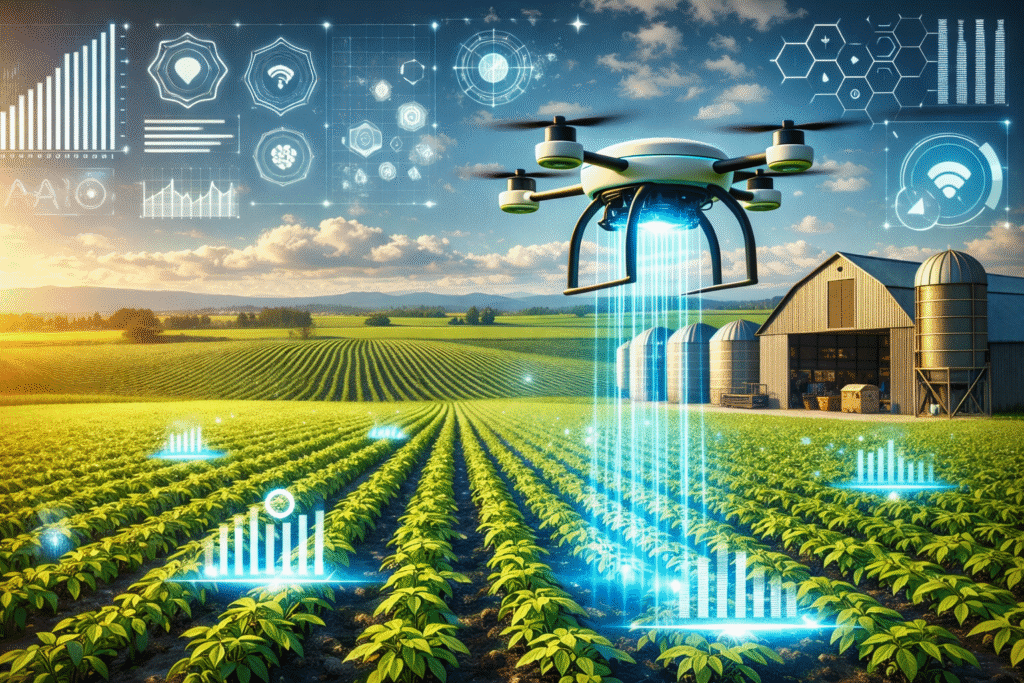
The Seven Best AI Careers in Sustainable Farming for 2026
These are the seven best AI careers in sustainable farming for the year 2026. Sites like ZipRecruiter and Farmonaut say that these occupations will be in great demand (25–55%) and pay handsomely (USD). But not a lot of people will want to work for them. Some of these problems, like cutting down on carbon pollution and using resources wisely, will take a long time to fix.
1. A farmer who uses AI
What you must do:
Make AI models that can help you breed crops, research soil, and figure out how to deal with climate change. This will help you generate greater yields over time. Using machine learning, we can find the optimal ways to use inputs and forecast when pests will show up. This can lower the amount of chemicals used by as much as 30%.
You need to know a lot about genetics, advanced plant science, data pipelines, programming (Python/R), remote sensing, AI/ML, and big data for this position.
The base compensation is around $75,000, and the range is between $89,000 and $120,000. That’s because AI makes 70% of farming decisions currently since there aren’t enough skilled personnel.
Why there isn’t a lot of competition and a lot of demand:
It combines specialist farming knowledge with contemporary AI. There is more demand than supply for sustainable crop management.
2. An AI expert on farming that is good for the planet
You need to show farms how to utilize AI to manage their resources, store carbon, and respect the rules. At the same time, you need to campaign for reforms that are beneficial for the environment.
You need to know the rules for being sustainable, how to read data, how to govern AI, and how to think like a consultant.
The salary is between $95,000 and $140,000. Demand has gone up 27% because guidelines say AI has to perform things that are good for the world.
Why Low Competition? High Demand:
Keep an eye on small farmers who aren’t getting enough aid; issues with AI adoption provide experts an opportunity.

3. An expert in precision farming
Use AI, drones, and sensors to make things like feeding, growing, and getting rid of pests more efficient in systems that are good for the environment. This will stop 25% of the water from being utilized.
People need to know how to connect IoT devices, fly a drone, use AI analytics, GIS maps, agronomy, and computers.
The salary is between $82,000 and $110,000. The market goes grown 12% every year, and demand has gone up 37%. The market is really strong right now because there isn’t much competition. This is because automatic hydroponics and growth that doesn’t depend on location are still very new.
4. Data analyst for farming (with a concentration on ecology)
Your objective is to use information about farms and the weather to build models that can help farmers grow more crops without harming the environment as much.
You should know how to use Tableau and other tools for showing data, as well as statistics, data science, SQL, and machine learning.
The salary is between $90,000 and $130,000 a year. 42% more because AI is getting better at delivering us knowledge that helps us make decisions.
“Why Low Competition/High Demand?”
Because it links business, technology, and risky farming, and anyone who knows how to use data can get started straight away.
5. AI that knows a lot about the health of soil
Duties:
Use AI to watch for changes in the land to maintain it safely, and use green energy to make farming better.
Abilities:
You need to know how to apply AI techniques, remote sensing, and ecological models to analyze soil and water.
The salary is between $84,000 and $115,000 a year. Demand: +25%, filling in the digital gap in places where there aren’t many resources. There isn’t much competition yet because this is a new industry that focuses on eco-integration. Also, there aren’t enough skilled people working in soil AI.
6. An AI expert to support new farms (sustainability)
You will have to build machine learning models to help businesses deal with trash and environmental issues as part of your profession.
Some of the talents you need are AI projects, deep learning, the cloud, and knowing how long something will last.
The salary is between $104,000 and $150,000. Demand has gone up by 55%, and automated systems have seen the most rise. People who care about the environment and want to work with computers don’t have to worry about competition because there is a demand for their talents.
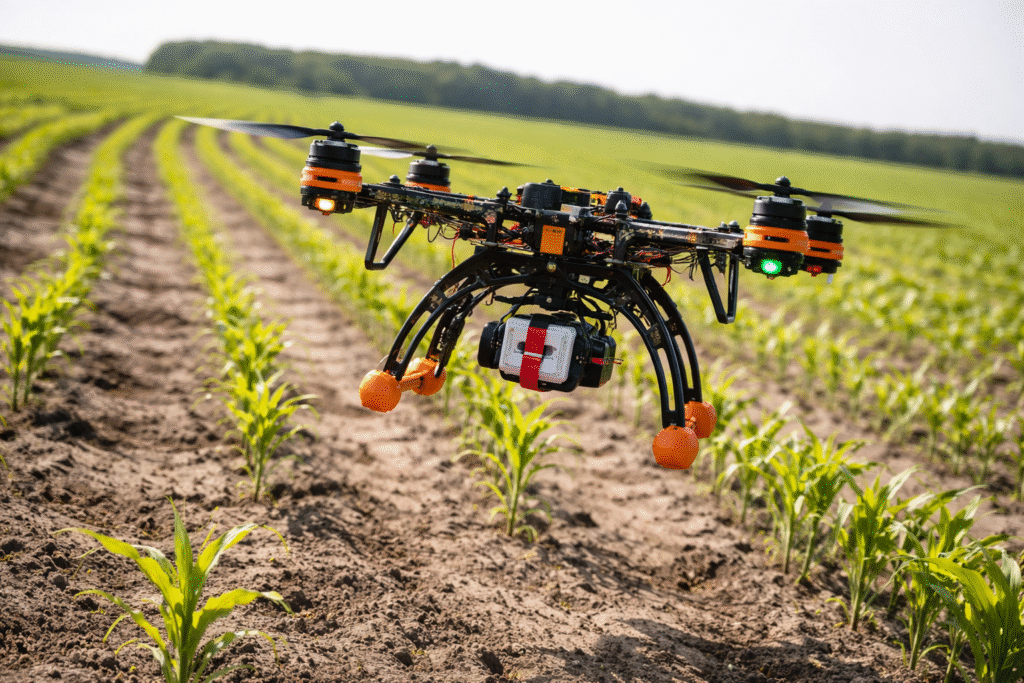
7. A person who uses a drone to look at crops from above
Duties:
Use AI drones to watch over people’s health in green spaces so that the right things may be done.
You need to know how to fly a plane and how to use computer vision, agri-mapping, and data analysis.
The salary is between $68,000 and $95,000, plus 40% because there aren’t enough workers to match the demand. Automation fills in the gaps, and there is a big need for skilled surveillance operators. This is why there is a lot of demand and not a lot of competition.
What Skills Do You Need for These Jobs?
You need both scholastic skills and business abilities for these entry-level AI agrotech jobs. These are some crucial skills:
- AI and Machine Learning: You need to be able to use models to make assumptions and run programs for 70% of jobs.
- Python/R, SQL, and GIS are some of the tools you can use to figure out what sensor data implies.
- “Fundamentals of Agronomy” is the study of plants, how dirt works, and how to stay alive.
- Some new technologies are drones, the Internet of Things (IoT), remote sensing, and AI that can make smart decisions in the field.
- “Soft Skills”: being able to manage projects, solve problems, and apply AI in a way that is fair to everyone.
Only a small number of people have these talents, which makes the fact that few people are applying for accurate agricultural AI jobs even more desirable.
How to Start: Entryways, Education, and Licenses
If you want to work in sustainable AI farming but don’t know anything about it, you should first earn a bachelor’s degree in computer science, agronomy, or environmental science. You should take AI classes if that’s the case. If you acquire a master’s degree in agrotech or data science, you can find work.
Important certificates:
- A certification in precision agriculture, such as one from ASABE that teaches AI and machine learning on Coursera or edX.
- A Part 107 license from the FAA to fly a drone.
- Green credentials, such as LEED or ways to measure carbon.
You can start by working for an ag-startup, joining a USDA program, or getting a smart ag internship. You may find out what kinds of AI farm skills customers want by connecting with them on LinkedIn or at events like the World Agri-Tech Summit.
Issues and the Future
Some of the issues are protecting data, AI bias in diverse situations, and high start-up expenses. AI could help farming in poor areas produce an extra $450 billion in GDP by 2030, though. Generative AI that can help farming robots will make it easier to travel to places with less competition.
The Bottom Line
In 2026, it will be challenging to find a career in sustainable agriculture that uses AI, but the ones that do will pay extremely well. Their role will also be highly significant for the health of the whole world in the long run.
The jobs pay between $80,000 and $120,000 a year, but there aren’t enough people to fill them. They are important and safe. These not-too-busy venues are great for learning more about AI and farms and helping the environment. Use the tools you have at work to learn more, and then start your journey right immediately.