
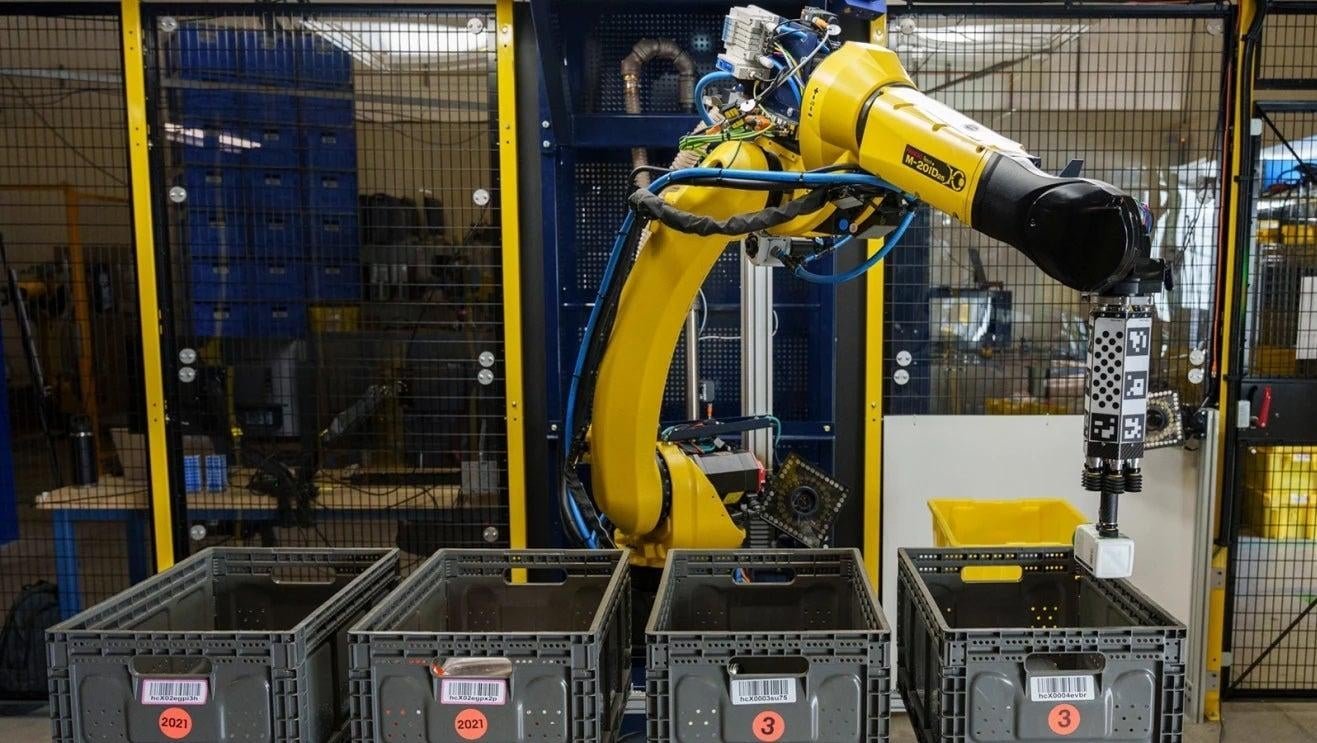
There are estimated 4,664,000 work -industrial robots in the world, according to the International Federation of Robotics. More than two million of them are in China. And do not expect anyone to catch up soon. According to the report, the country installed nearly 300,000 new robots last year and was responsible for 54% of all robotic installations across the globe by 2024. For comparison, the US figure succeeded about a tenth of this figure and added 34,000 industrial bots in the same timeframe.
China’s robot boom coincides with the country assuming the role of a global production manager. According to the New York Times, China now holds just under a third of all global production production, up from only 6% of the cake at the end of the 21st century. This makes China’s current output greater than the combined production power of the United States, Germany, Japan, South Korea and the UK.
That gap probably seems to continue to expand. While China’s robotic installations rose year by year by approx. 7%, according to the International Federation of Robotics, the next largest robo-dependent nations saw all their total installations dip. Japan fell by 4%, the United States fell by 9%, South Korea fell by 3%, and Germany slipped by 5%.
IFR also doesn’t see China’s automation recording stops soon. It projects the country will see an average of 10% growth annually through 2028, which is primarily divered by the introduction of industrial robotics to new markets. China’s largest growth areas in the past year included food and drink, rubber and plastic and textile production, while the United States continues to see robotics primarily used for more traditional production fields such as cars.
Interestingly, while China’s robotics dominances occur partly driven by new technological developments such as artificial intelligence, the country is not for humanoid robots compared to other industrial forces. The New York Times attributed the fact that it is difficult to build a humanoid bot completely in the Chinese supply chain, where domestic manufactured sensors and semiconductors may be harder to come up with. Meanwhile, companies like Tesla and Boston Dynamics continue to promise humanoid industrial workers who are likely to have a steep price tag.
Perhaps the biggest activation of China’s robot boom, however, appears to be human labor. According to Times, the country has produced a large workforce of skilled electricians and programmers that can install and maintain robots. America is slowly catching up on this front, with the hiring of electricians who flourish-even there is still a massive programming shortage that will unlikely to be relieved by the fact that Trump administration’s new, increased fee for H1-B visa-seekers will keep qualified labor abroad.