
LLM -fast tracking gives you visibility in how large language model tools (also called AI systems) mention your brand so you can optimize your content strategy.
This guide shows you how to create fast tracking. Including how an agency used quick tracking to improve its appearance in LLMS.
Let’s go over some basic first.
What is LLM -Fast Tracking?
LLM -fast tracking is when you monitor and analyze the text requests (requests) that a user is included in AI models and the answers generated by the models.
For example, say that a user asks chatgpt: “What are the best tools for UX?”
Quick tracking allows you to log that inquiry, detect Chatgpt’s response, note if your brand was mentioned, and trace how the answer changes over time.
The most important difference from traditional SEO monitoring? Instead of tracking key words rankings on search result pages, you track brand mentions and feelings in conversation AI response.
And quick tracking is becoming increasingly important as more users are dependent on LLMs. Because it’s another way to find out how users discover your brand.
We used Semrush’s AI traffic panel to see how five major site traffic from LLMS increased from August 2024 to August 2025. All five experienced climbs – and Roblox saw an increase of over 1,000%.
|
Website |
August 2024 AI traffic |
August 2025 AI traffic |
% Increase |
|
ROBLOX.COM |
35.5k |
402.7k |
1,034% |
|
Nytimes.com |
81.2K |
218.1K |
169% |
|
Dailymotion.com |
10k |
106.3k |
963% |
|
Walmart.com |
67.3k |
526.9k |
683% |
|
Bbc.com |
111.5k |
245.7k |
120% |
What are the benefits of quick tracking?
The main advantage of quick tracking is that it reveals your AI visibility so you can take actions that ultimately contribute to more revenue.
More specifically, quick tracking helps you:
1. Manage your brand reputation
Tracking LLM -Fighting Responses helps you catch outdated or wrong fire information so you can take steps to ensure that users get the right information about your business.
For example, an LLM may mention a pricing that you ceased two years ago. And the prospects may reject you as “too expensive” based on incorrect data. And you can see this error if you track prompt.
Then you can fine -tune your content strategy to encourage LLMs to get the right numbers. For example, update your review site profile with updated pricing. And answers to user questions in forums about your pricing.
2. Find content and message holes
Identifying the topics where AI highlights your competitors but not your brand can reveal new content options.
How to work this:
Say you are working for a software business. And quick tracking shows that LLMs consistently mention “integrations” when you talk about your competition that you miss because your site lacks content that discusses your integrations.
So you can create content that addresses your integrations to try to catch mentions from your competitors in LLMS.
3. Uncover content optimization options
Tracking Medions show you which topics and content formats (such as how-to-guides or product comparison pages) earn the most mentions so you can create more of what works to improve your LLM share of the voice.
You may even notice that different LLMs prefer different types of content. As Steve Morris, founder and CEO of Newmedia, did.
Steve made a visibility audit for a client and found that Chatgpt was the only LLM to recommend his client as the best solution for certain queries. And that other LLMs like confusion and Gemini did not mention his client.
“The fix was to rewrite their existing pages with high converting in forms that each of the other LLMs prefers: a Reddit Q&A thread for confusion, a page with a list for chatgpt and a blog post to Gemini talking about alternatives to the client’s product.”
Steve notes that he and his team are reviewing output from different LLMs to determine what content each LLM prefers. They do this by entering questions in chatgpt, confusion, claude and gemini. And keep track of whether the client was mentioned and whether LLM cited the client’s page directly, only a link delivered or paraphrased client’s page without a link.
“Once you’ve done this in a few dozen prompt and a few hundred passports, you start to see patterns.”
In six weeks, Steve’s work helped his client go from zero to five confusing quotes. And he increased the number of quick answers that the client was mentioned from 40% to 70%.
How to do LLM -Awhen Tracking
Quick tracking follows a three-stage process: Record fast and response data, add tags to additional context, and then analyze patterns over time to find ways to optimize your LLM strategy.
Here’s how it works in practice:
Step 1: Record Prompt and Answer Logs
The basis for quick tracking detects systematically AI interactions that are relevant to your brand or industry.
You have two options:
- Manually create a custom script that sends promp to LLMS via APIs and log output
- Use an LLM monitoring tool that tracks asking automatically
Tracking Medions and Output are manually boring because it requires the collection of a large number of prompt and consistent registration of answers over time to observe how they change. It also requires a lot of technical know-how.
Therefore, most marketers turn to tools.
Semrush’s AI SEO Toolkit allows you to track tracks. And gives you further insight to help you rank higher.
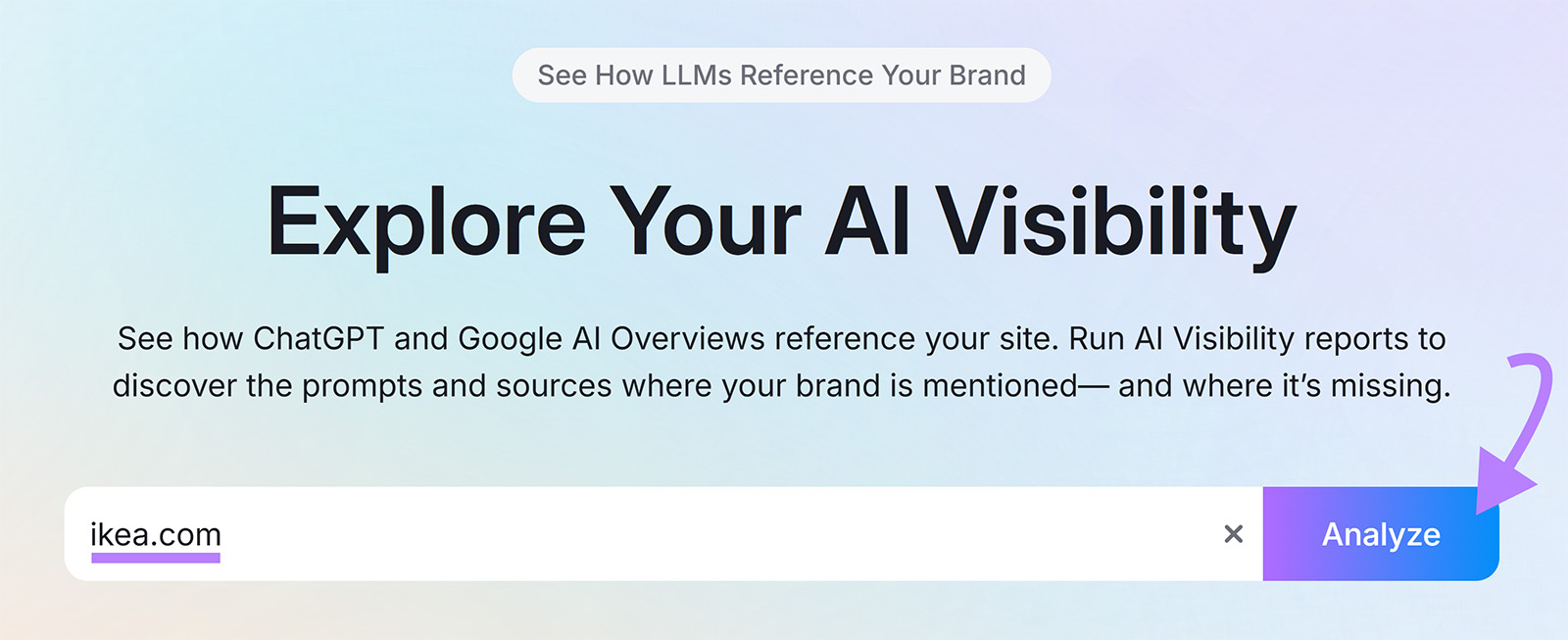
Open the visibility overview Dashboard, enter your domain and click “Analyze. “
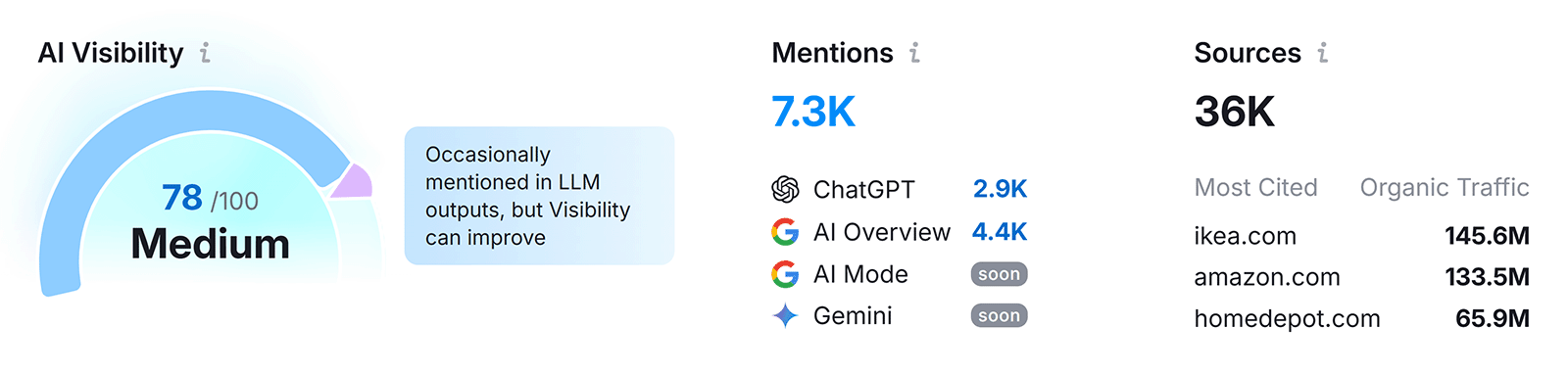
The top of the dashboard shows a summary of your visibility in LLMS. Includes your top competitors and a collapse of mentions across LLMs.
Scroll down to see a list of requests where LLMs mention your brand. You can also see other brands mentioned with yours.
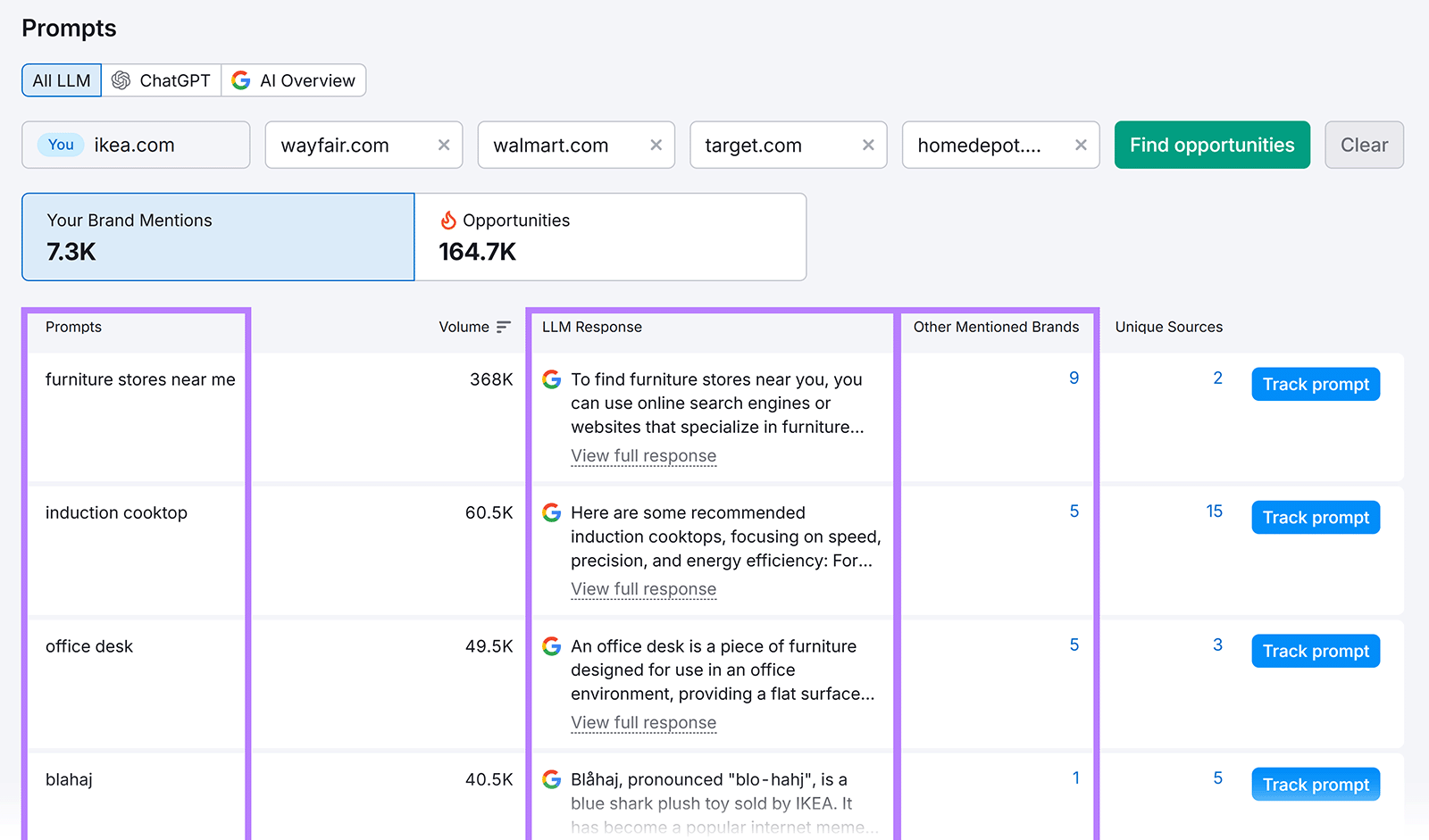
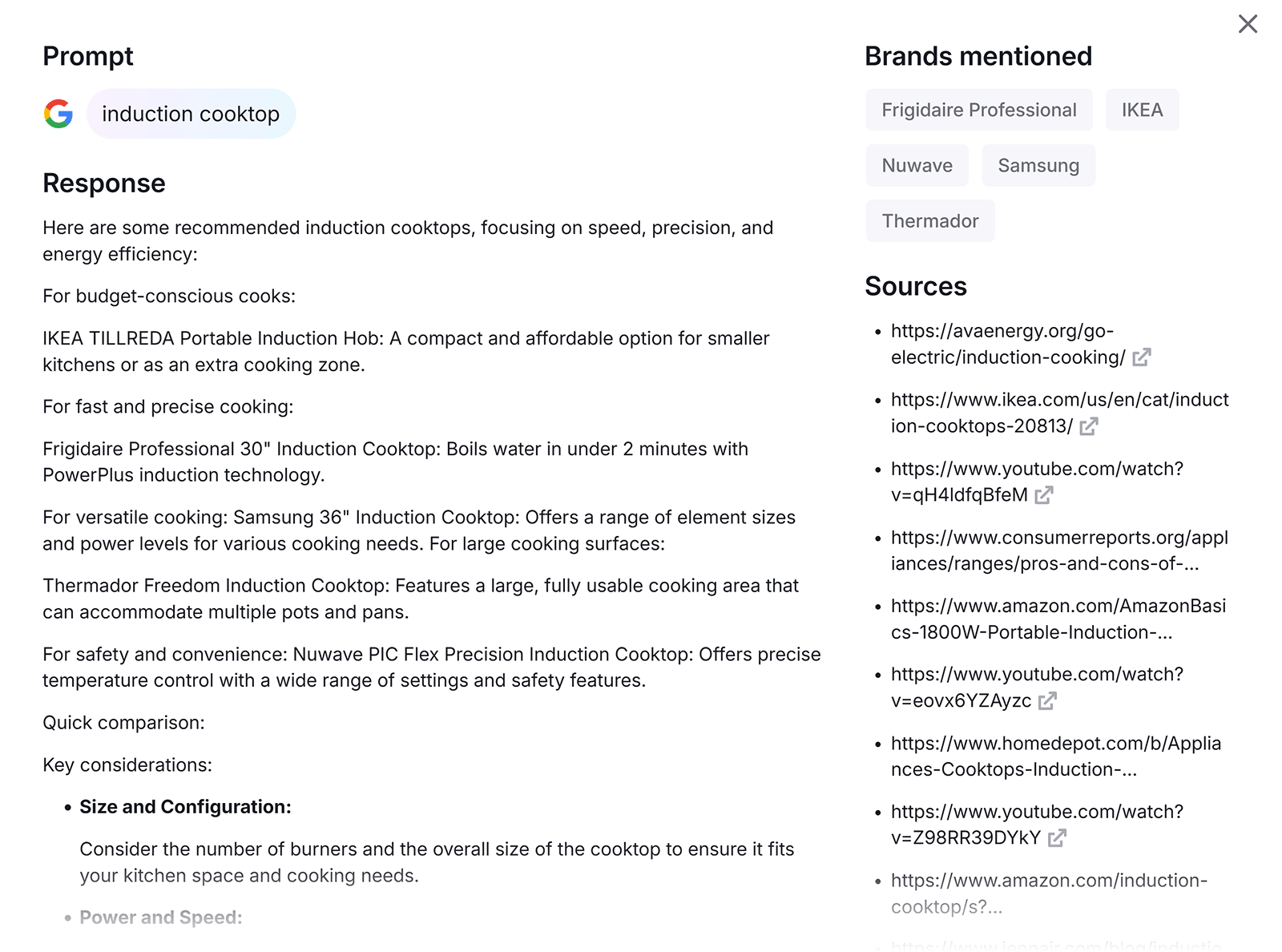
Click “See the full response“To see how LLM mentions you and your rivals.
Click “Opportunities“Shows you pray where you don’t rank but your competitors are.
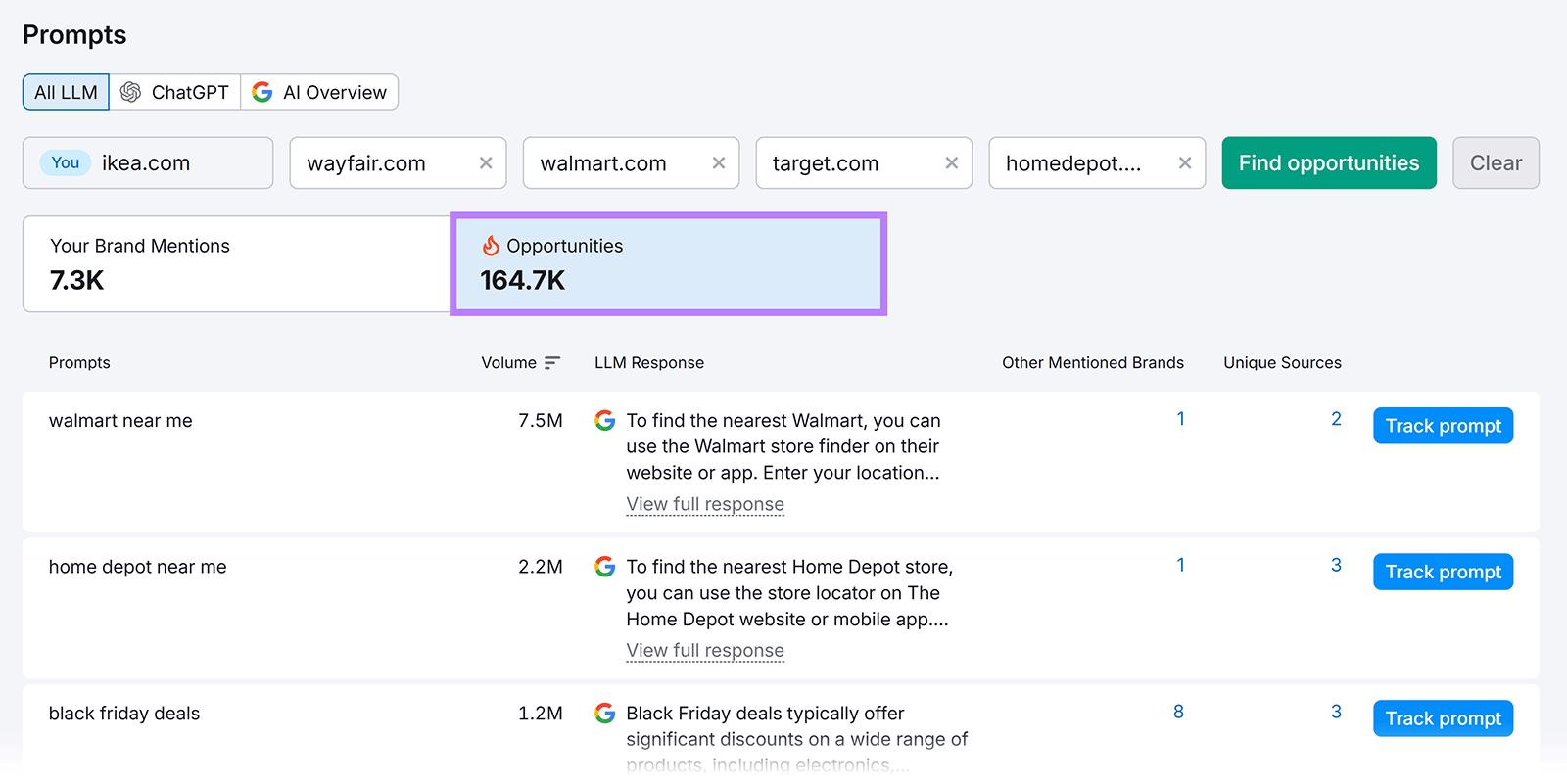
Make a list of all the requests you would like to track.
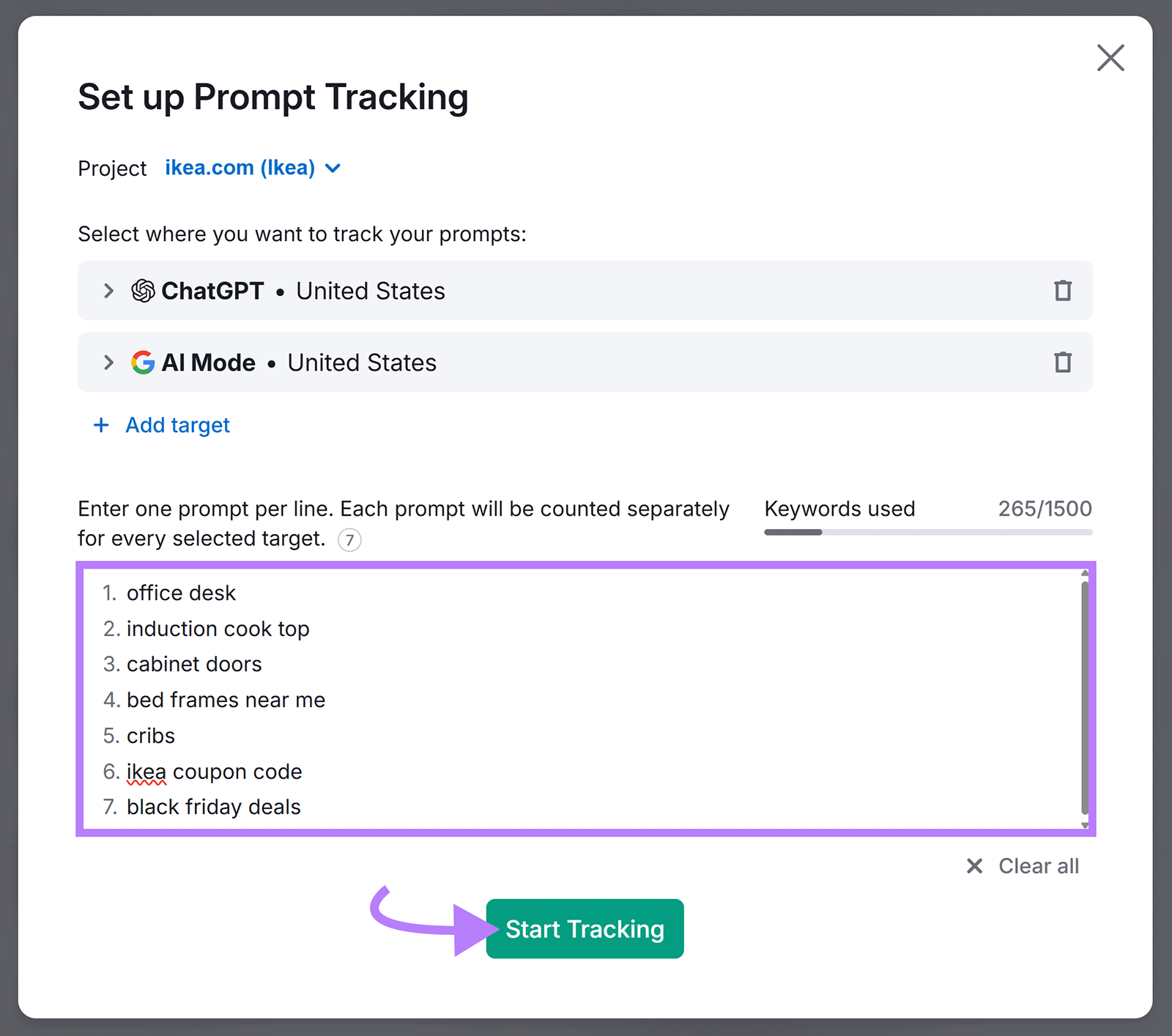
Then click on the blue ”Track Prompt“The button, select which LLMS you would like to track your requests and include all the instructions you would like to track. Click”Begin to track“To end your campaign.
Step 2: Take your prompts
Adding tags to your prompts gives you a high level of the types of prompts that generate the most visibility for your brand, so you know where to focus your efforts and what to improve.
Here are some tagids:
- Campaign -tags: Link -promoting to specific marketing initiatives to see which campaigns are working best
- Search intentions: Search intention is the reason someone performs a search. Label asks with different search objectives (eg information) to see how each one works.
- Topic -tags: Marking items to see which ones are driving the most traffic so you know what topics to continue to create content for
You can add tags in semrush’s quick tracking tool by going to ”Tags“Loss and click”Take keywords. “
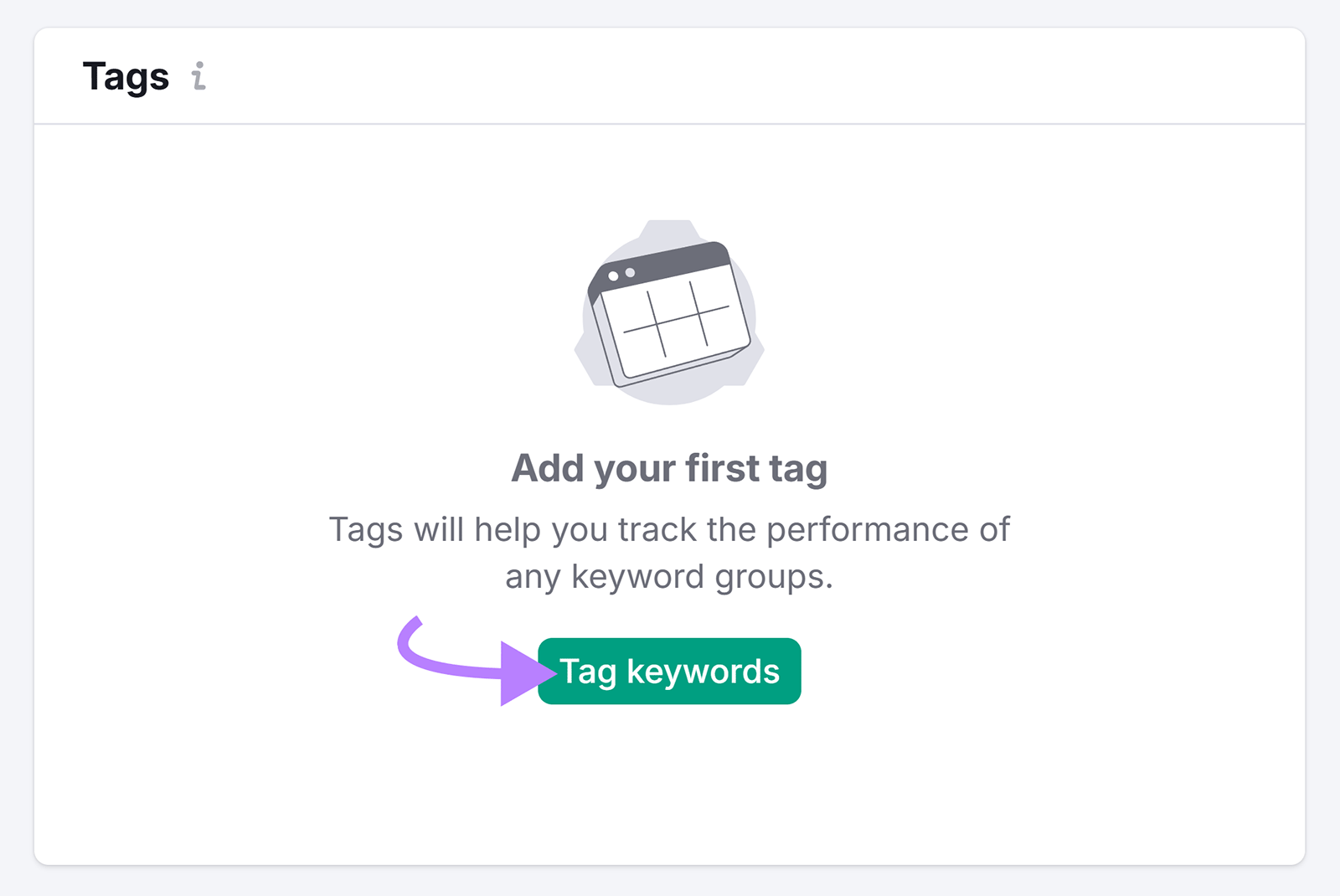
Add a roof and select the keywords you want to apply it to. Click “+ Add tags“When you’re done.
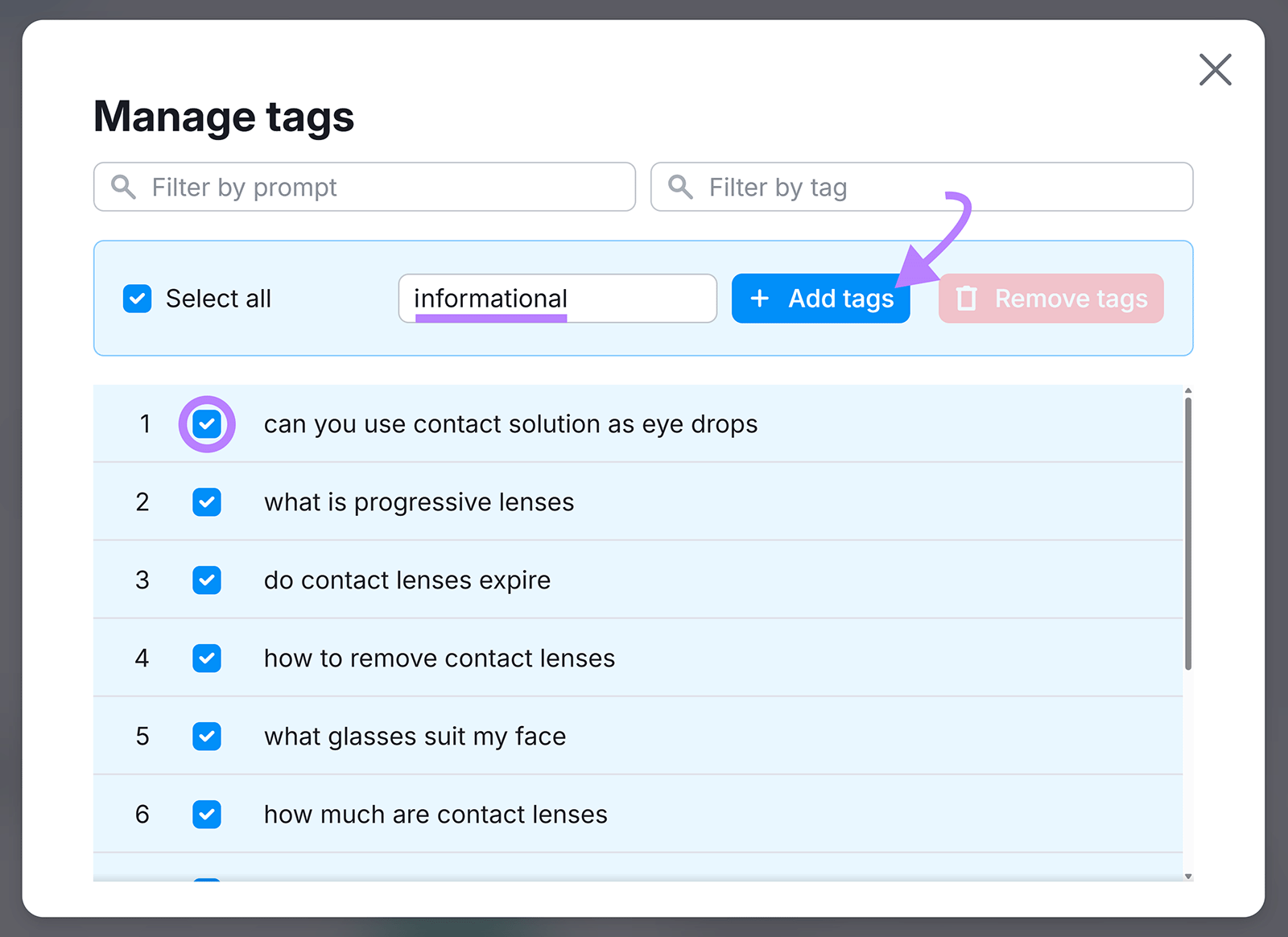
Then you can review all prompts that correspond to a particular group. As well as the group’s overall visibility and average position within the LLM you specified when you created the campaign.
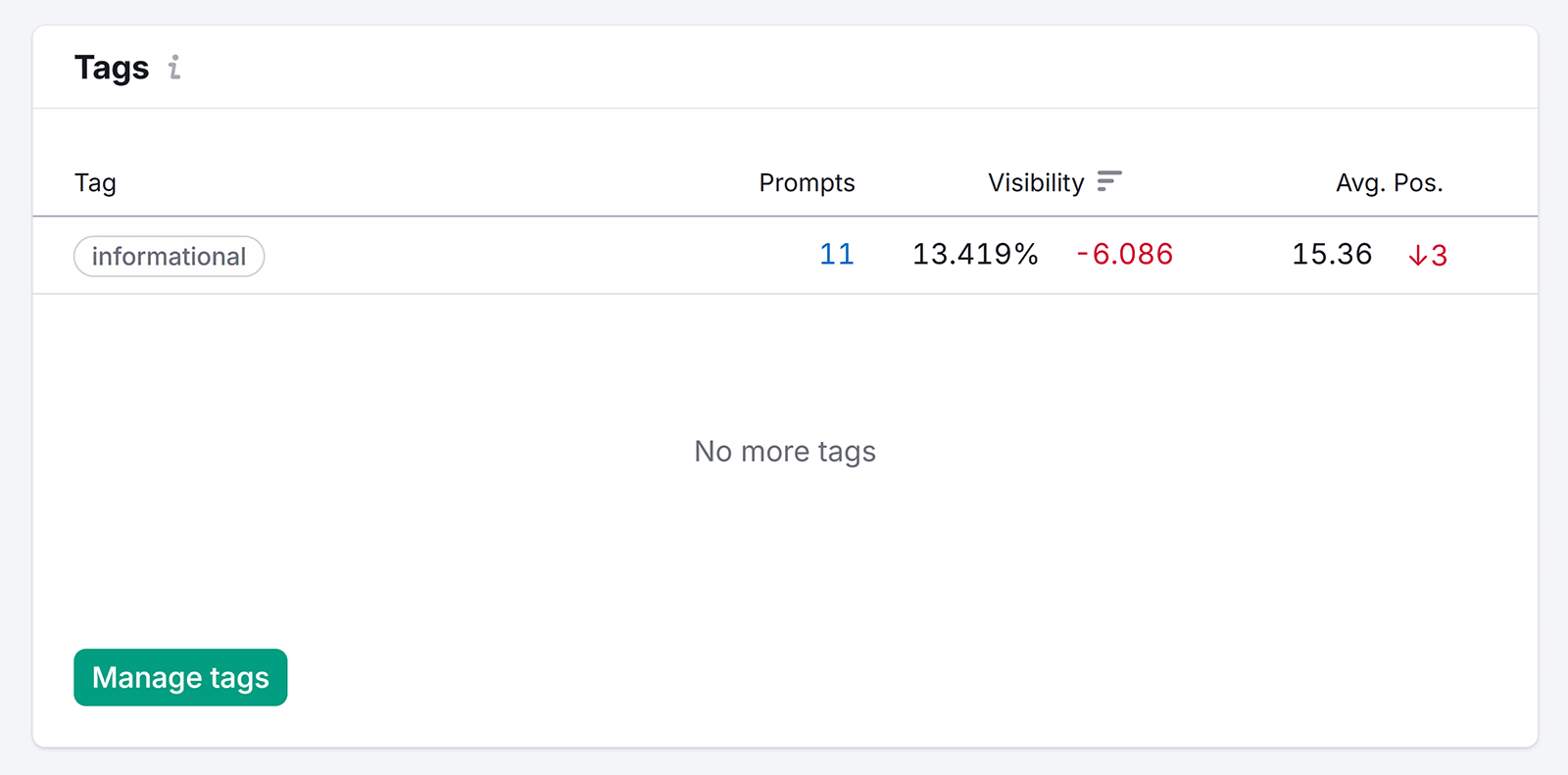
For example, if your visibility for informative keywords is low, you may update your content in a way that places direct response immediately under headings.
Step 3: Analyzes Prompt over time
Reviewing your requests and the overall LLM visibility over time can help you come up with ideas that can enable you to surpass your competitors.
The quick tracking tool shows you how your brand works over time for each of your specified prompt.

If you notice that your visibility goes down for certain prompt you might:
- Restructure your content more clearly for LLMS (ie using schedule -marking – code that helps search engines and LLMs better understanding your content – to improve the AI visibility)
- Join Digital PR to get more people talking about your products/services
- Build your brand’s authority by getting mentioned from authoritative sources
Semrush’s brand performance gives you tailor -made advice to improve your locations.
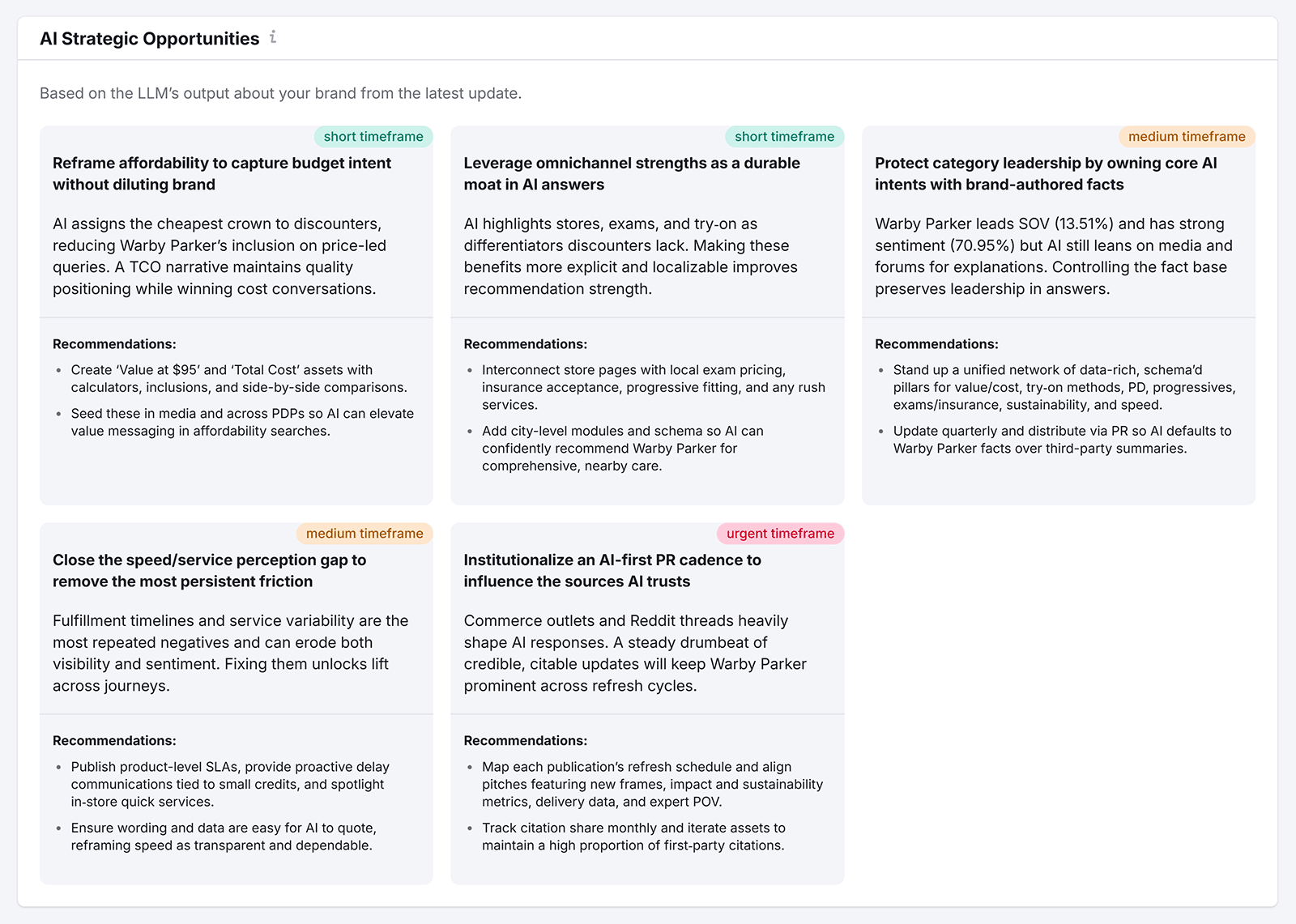
Follow these recommendations (based on their time frames) to improve your visibility in LLMS. You are likely to see that your positions in quick tracking are improving as a result.
Begin to track your prompts
Quick tracking is still a relatively new concept, so it can give you an advantage over your competitors who may not yet do the same.
Semrus’ fast tracking tool can track keywords in LLMS. So you know where to focus your LLM optimization effort.
Try semrush for free and start tracking your LLM Prompts.